ISO 55001:2024 Will Test Whether Asset Management Evidence Survives Inspection
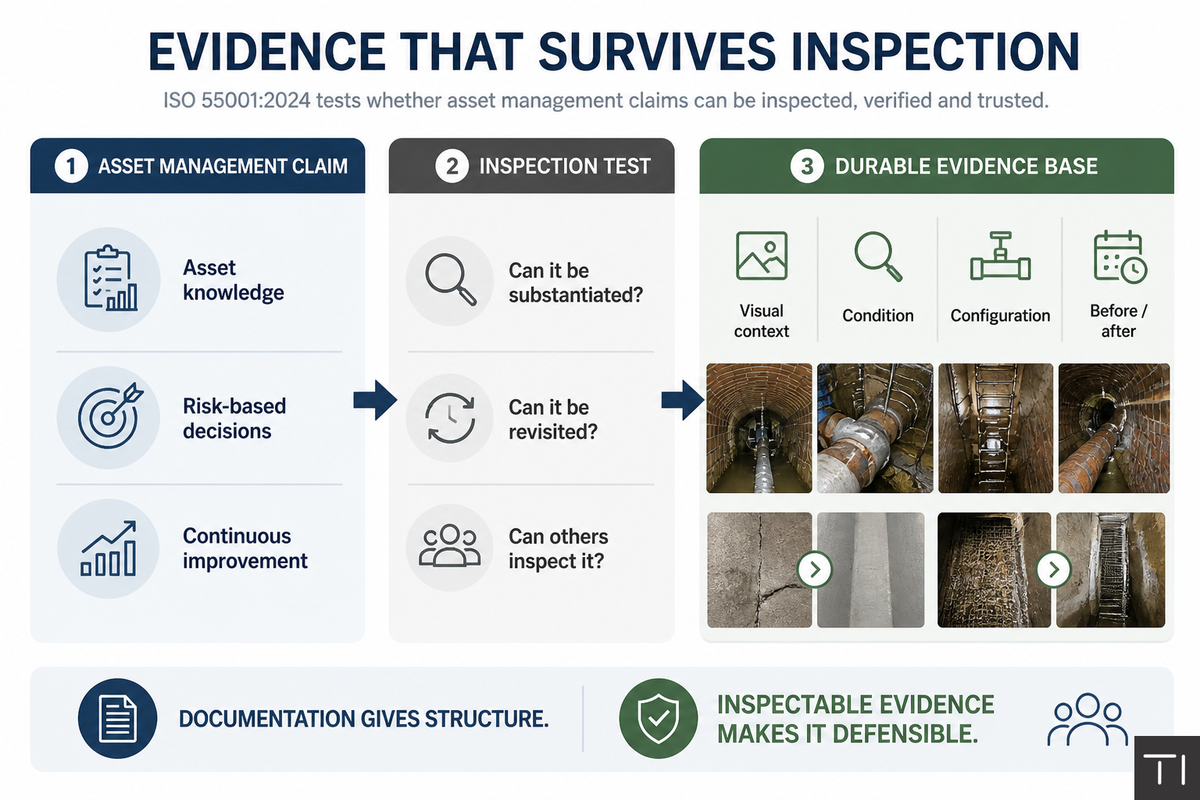
ISO 55001 has always been about discipline rather than technology. It sets out what a good asset management system looks like: objectives aligned to outcomes, decisions grounded in risk, and processes that can be demonstrated and improved over time. For many organisations, certification has meant documenting those elements clearly and showing that they are applied consistently.
The 2024 revision does not change that intent, but it sharpens how it is interpreted. In the UK water sector, where regulators are already moving toward more engineering-informed and asset-specific supervision, the standard will be read less as a documentation exercise and more as a test of whether asset management claims can withstand inspection.
That distinction matters.
Under lighter scrutiny, narrative has often been sufficient. Asset registers describe what exists. Performance metrics indicate how systems behave. Reports summarise interventions and outcomes. Together, these create a coherent picture of how assets are managed. Within the organisation, that picture is usually understood and trusted.
Under certification and ongoing surveillance, the same picture is examined differently. Auditors are not only asking whether processes exist, but whether they can be substantiated. When a company states that it understands the condition of its assets, or that it is prioritising interventions based on risk, the question becomes: what evidence supports that claim, and can it be independently examined?
This is where many asset management systems become fragile. The information needed to answer those questions often exists, but it is distributed across reports, drawings, and individual experience. It may require explanation to interpret, or rely on people who were present at the time of inspection. Over time, and particularly across organisational change, that context is lost.
ISO 55001:2024 does not explicitly prescribe how evidence should be captured, but it raises expectations about its quality. Asset knowledge needs to be more than inferred. Risk-based decisions need to be more than asserted. Continuous improvement needs to be more than documented. In each case, the underlying assumption is that evidence can be revisited and understood without relying on narrative continuity.
This aligns closely with the direction of regulatory reform. The move away from operator self-reporting toward more open, digitised, and inspectable evidence means that the same questions will be asked by regulators and auditors. What is known about the asset base, how that knowledge was established, and whether it can be tested independently.
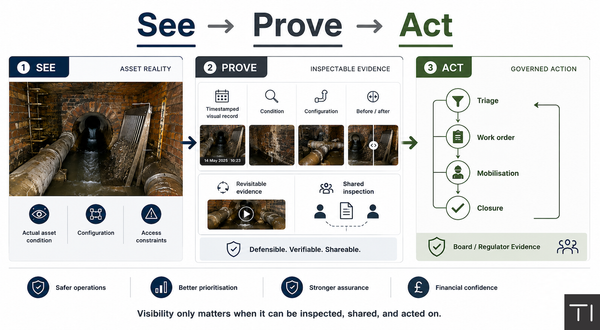
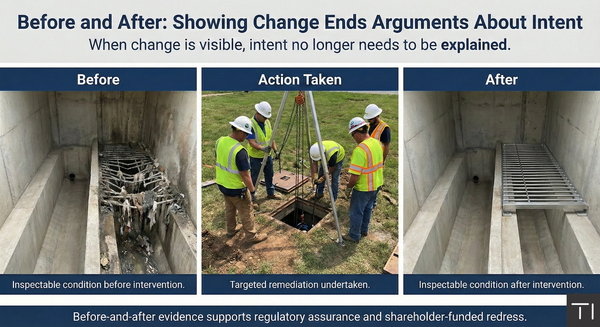
In practice, this changes how asset management systems are experienced on the ground. Field observations that were once summarised into reports now carry greater value in their original form. Visual and spatial records of condition, configuration, and access constraints become part of the evidentiary base rather than supporting material. Decisions that can be traced back to observable reality are easier to defend than those that rely on interpretation alone.
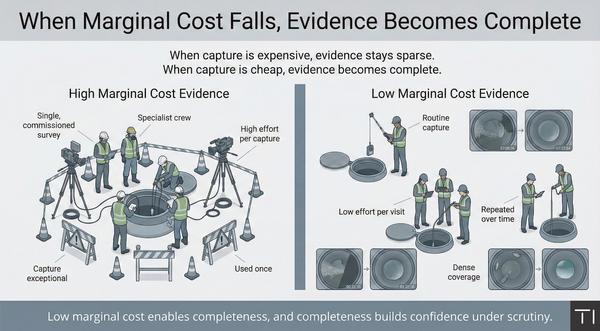
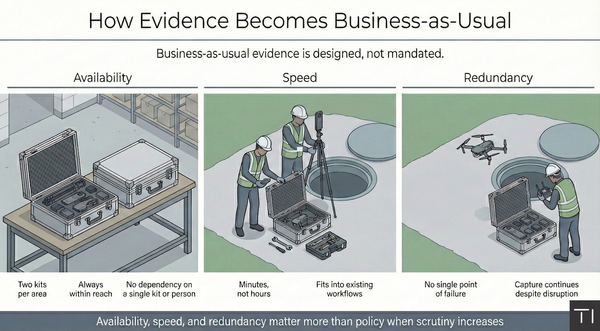
It also changes how organisations think about continuity. ISO certification is not a one-off event. It requires surveillance, re-certification, and the ability to demonstrate that practices persist over time. Evidence that degrades, or that depends on individuals to explain it, becomes a liability. Evidence that can be revisited months or years later, by different audiences, supports the kind of continuity the standard is designed to test.
None of this requires a fundamental redesign of asset management frameworks. Objectives, planning processes, and governance structures remain essential. What changes is the expectation that these elements are supported by evidence that can stand on its own. Documentation remains necessary, but it is no longer sufficient.
For water companies being encouraged or required to align with ISO 55001:2024, the implication is straightforward. Certification will increasingly depend not just on what is written down, but on what can be shown. Practices that rely on inference and explanation will face more challenge. Practices that normalise inspectable, revisitable evidence will align more naturally with both the standard and the emerging regulatory model.
The shift is subtle but significant. ISO 55001 has always asked organisations to manage assets systematically. The 2024 context makes clear that “systematic” now includes the ability to demonstrate asset understanding in a way that survives inspection. In that environment, the strength of an asset management system is measured less by the coherence of its documentation and more by the durability of its evidence.