Why Six-Month Remediation Windows Break Traditional Survey Models
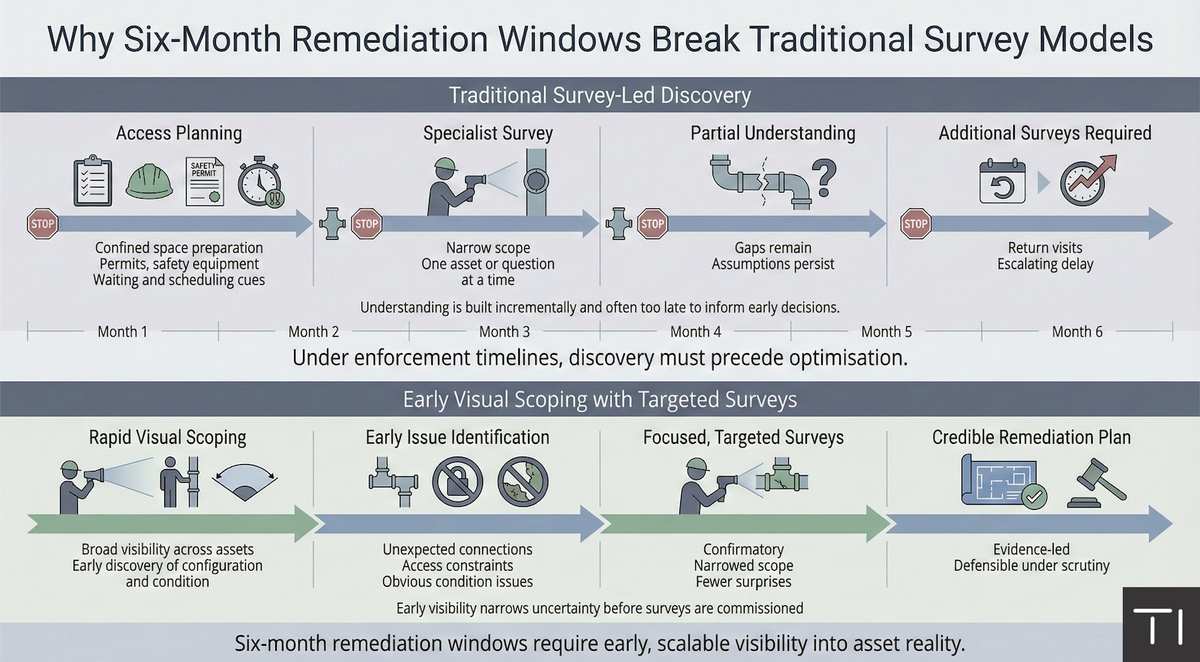
Ofwat’s recent enforcement actions have changed the tempo of remediation. Water companies are now being required to produce credible remediation plans for wastewater treatment works and networks within compressed timeframes, often measured in months rather than years. Six-month windows are becoming common. This shift exposes a mismatch between regulatory expectations and the way asset understanding has traditionally been gathered.
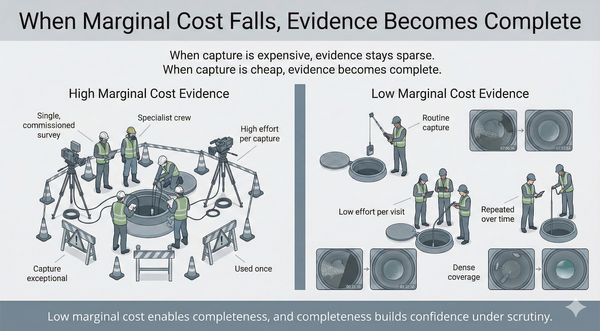
Conventional survey models were not designed for this pace. Restricted-entry surveys, specialist inspections, and one-off site visits are effective when time allows for careful scheduling, procurement, and follow-up. Under enforcement timelines, those same approaches become bottlenecks. Access constraints, safety planning, and contractor availability quickly consume the available window before substantive decisions can even begin.
The result is a familiar pattern. Initial remediation plans are built on partial information. Assumptions are made to keep programmes moving. As delivery approaches, evidence gaps surface and require further surveys or clarification. Late discovery forces redesign, scope adjustment, or conservative fallbacks. What begins as a planning exercise turns into a reactive cycle under regulatory pressure.
Rapid visual scoping changes this dynamic. When teams can access rich, observable site context early, they are able to screen options quickly and focus effort where it matters. Unexpected configurations, missing or redundant assets, access constraints, and obvious condition issues are identified before surveys are commissioned, not after. This does not remove the need for specialist inspection, but it ensures that such inspections are targeted rather than exploratory.
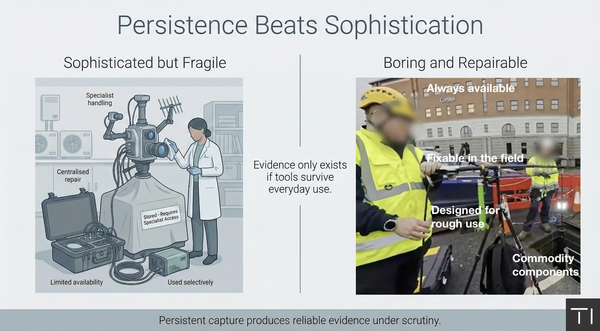
This is where the idea of a force multiplier applies. High-dimensional visual evidence does not replace engineering judgement or detailed surveys. It amplifies them. Engineers, planners, and operators can resolve basic questions remotely, align on priorities, and narrow the scope of further work. The same evidence can be reused across planning, assurance, and board oversight, reducing duplication under time pressure.
The contrast with legacy survey cadence is stark. Traditional approaches assume that understanding will be built incrementally, with each survey answering a narrow question. Under six-month remediation windows, that sequence breaks down. There is simply not enough time to discover the asset base one confined space at a time. Visibility has to precede optimisation.
This matters particularly for WWTW and network remediation, where Ofwat is expecting root causes to be identified and addressed, not just symptoms. Funding requests are being scrutinised against whether issues should already have been understood through routine maintenance. Where evidence cannot demonstrate that proposed interventions target verified problems, plans are rejected or deferred.
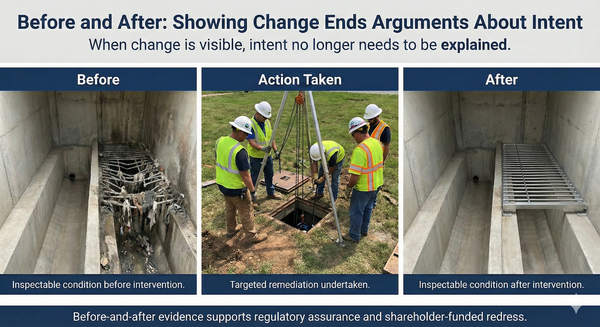
Early visual scoping helps to avoid this trap. When remediation plans are grounded in observable reality from the outset, they are easier to defend. Boards have clearer line of sight. Regulators can see how conclusions were reached. Subsequent surveys become confirmatory rather than exploratory, supporting delivery rather than delaying it.
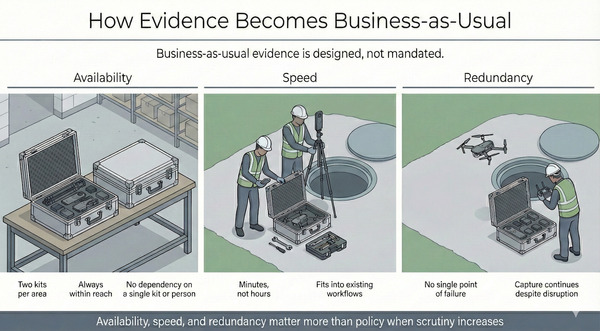
The implication is not that surveys are obsolete. It is that their role changes under enforcement conditions. They become tools for precision, not discovery. In a six-month window, discovery must happen quickly and at scale, using evidence that can be gathered and shared without waiting for access to every asset.
Ofwat’s enforcement timelines have made this unavoidable. The regulatory expectation is not that companies work faster in the same way, but that they work differently. Approaches that rely on slow accumulation of understanding struggle to keep up. Approaches that establish early visibility into asset reality give teams a chance to respond proportionately, even under intense scrutiny.
In this environment, the ability to see first and survey second is no longer a convenience. It is what allows remediation programmes to remain credible when time is no longer on their side.