
Transformation
Trace Intercept enables organisations to reconsider how asset surveys, inspections, and evidence capture are performed.
This page describes a common transformation pathway from traditional survey workflows toward a reality-layer-first model.
This guidance reflects leading practices. Your organisation defines its own operational, safety, and governance standards.
Traditional Survey Model
In many organisations, asset information is gathered through purpose-specific surveys.
Typical process:
• Confined space entry
• On-site measurement and inspection
• Completion of survey cards
• Transcription to PDF
• Return to requesting program
• Possible re-transcription into structured systems
This approach:
• Is labour intensive
• Often duplicates site visits
• Requires repeated confined space entries
• May involve repeated traffic management
• Introduces transcription risk
• Fragments visual and structured data
Trace Intercept does not replace formal surveys. It introduces a structured visual layer that can change how and when surveys are required.
Reality-Layer-First Model
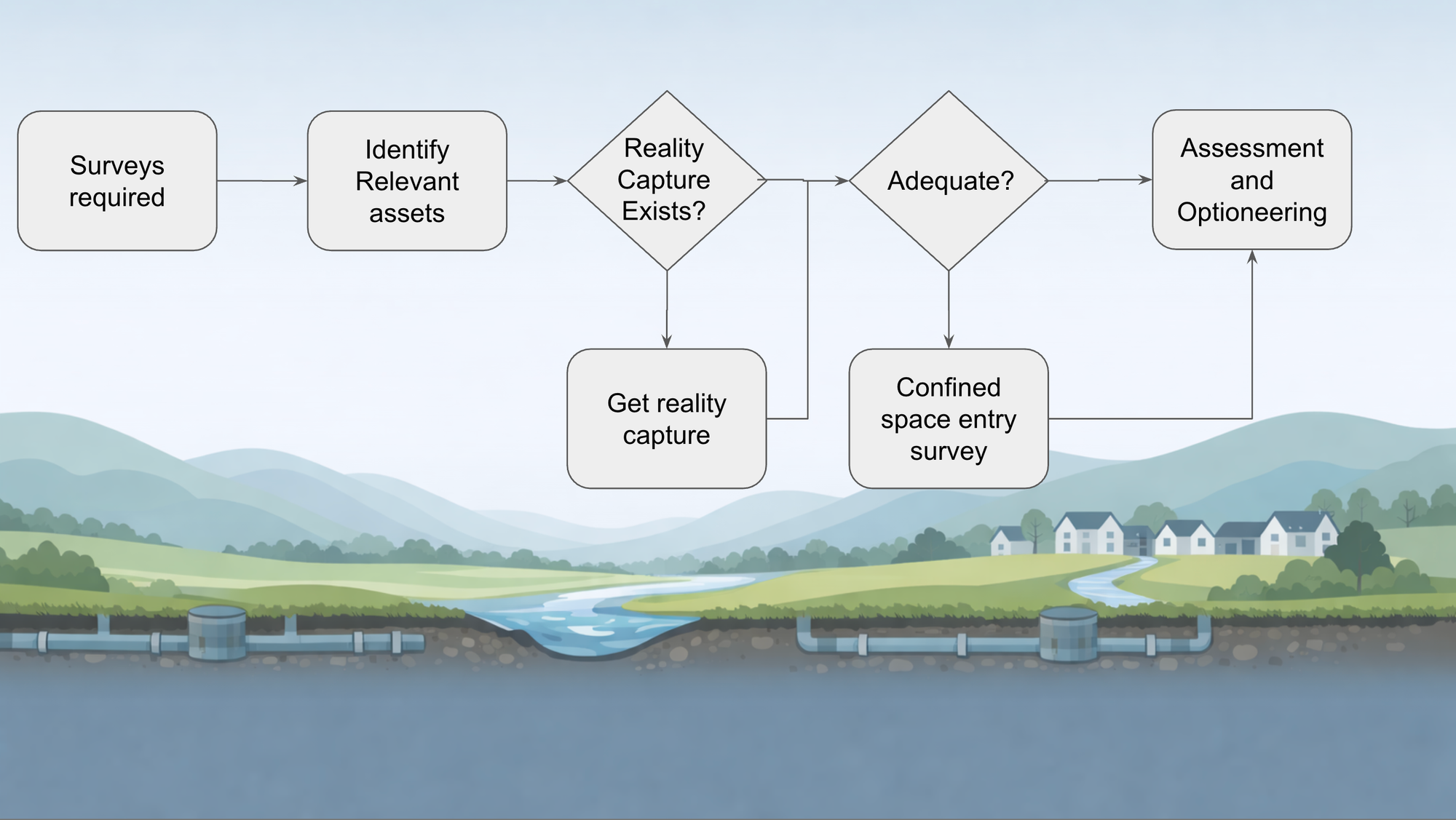
A transformed workflow begins with desk review.
Step 1: Desk Survey
The requesting function:
• Reviews the asset in Trace Intercept
• Examines imagery and historical captures
• Reviews notes and defect records
• Evaluates whether existing evidence is sufficient
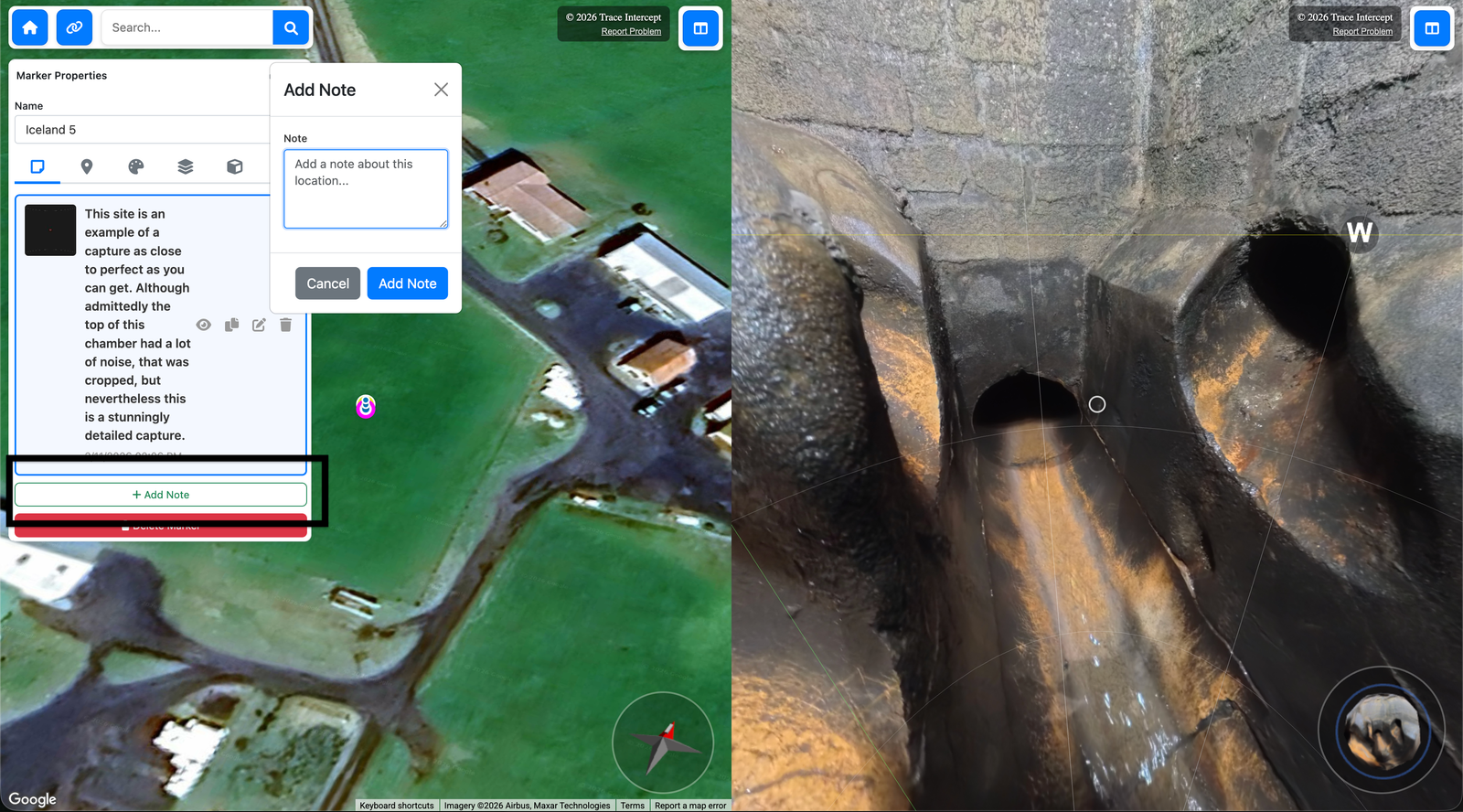
Where deep linking is supported, notes may include links to:
• Asset management systems
• Work order systems
• GIS platforms
• Hydraulic models
Trace Intercept does not replace these systems of record. It adds structured visual context.
Step 2: Targeted Capture (If Required)
If existing evidence is insufficient:
• A Trace Intercept capture is requested
• Reconstruction and calibration are specified if required by internal procedures
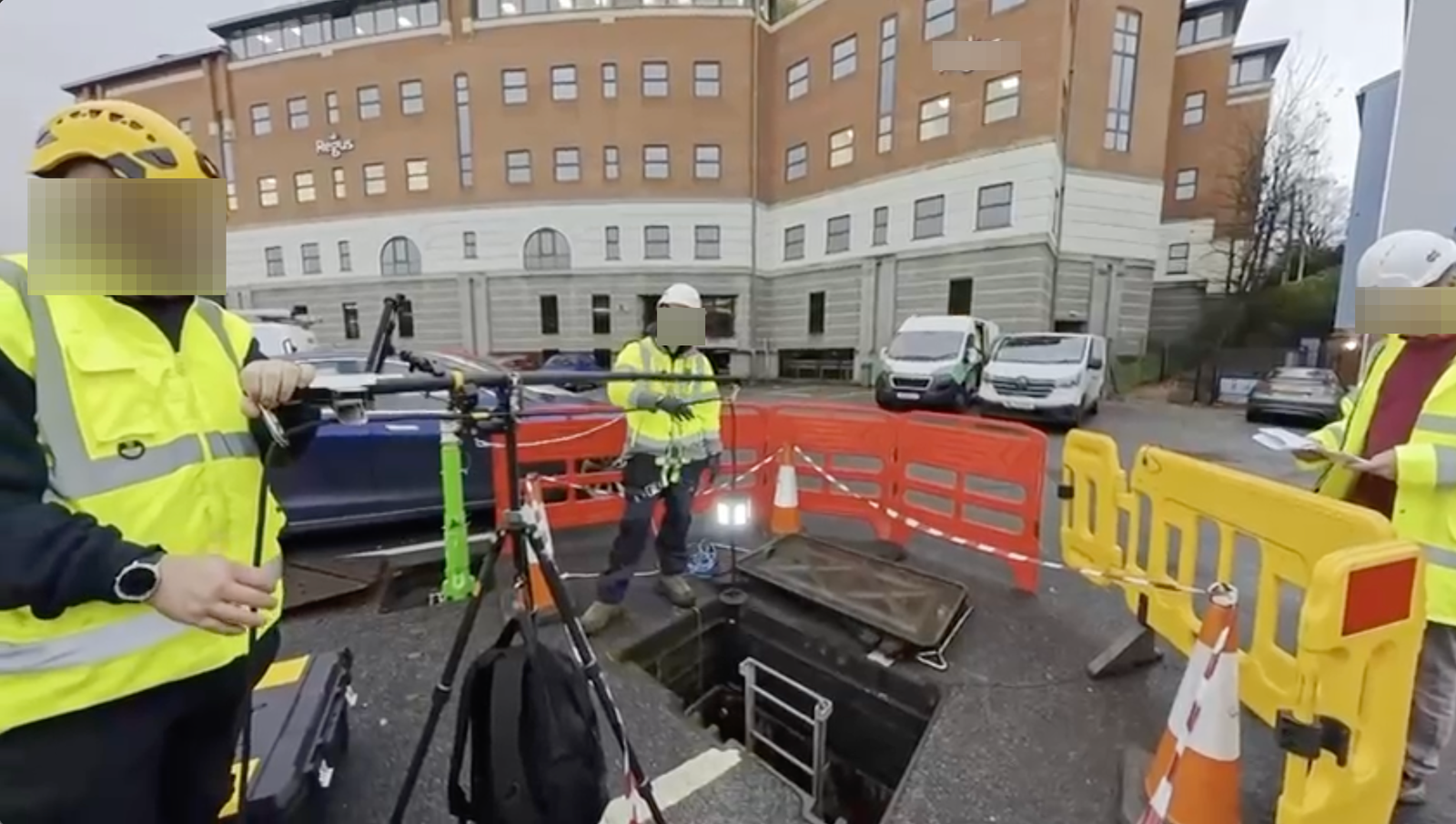
Capture teams:
• Perform structured capture
• Typically complete in under 15 minutes
• Update the shared reality layer
The requesting team reviews the updated capture to determine whether their requirements are met.
Step 3: Confined Space Entry (Only When Necessary)
Only when Trace Intercept capture is inadequate should traditional confined space entry be required.
Examples may include:
• Access to obscured or dark areas
• Detailed structural assessment
• Regulatory-mandated inspection
• Physical sampling
In some cases:
• Trace Intercept capture equipment may be taken into the chamber
• Additional imagery may eliminate the need for repeat entry
• Traditional survey cards may still be used
The objective is not elimination of confined space entry. It is reduction where appropriate.
Impact on Confined Space Entries
A reality-layer-first model may:
• Reduce the number of confined space entries
• Reduce repeat entries
• Reduce traffic management overhead
• Improve preparation before entry
• Improve safety planning
All safety requirements remain defined by organisational and regulatory standards.
Impact on Survey Card Workflows
Trace Intercept enables organisations to reconsider how survey data is structured.
Instead of:
• Paper survey cards
• Transcription to PDF
• Re-transcription into spreadsheets
Organisations may:
• Use desk surveys as a first pass
• Use visual evidence and measurement to validate structured fields
• Reduce redundant data capture
• Improve traceability of observations
Trace Intercept does not mandate a new survey standard. It provides a visual reference layer that may improve existing processes.
Benefits of Transformation
When applied appropriately, this model will:
• Reduce duplicated surveys
• Shorten work request cycles
• Improve cross-functional visibility
• Reduce transcription risk
• Improve regulatory defensibility
• Improve planning accuracy
Transformation is an organisational choice. Trace Intercept provides enabling capability.
Maintaining Systems of Record
Trace Intercept is not intended to replace:
• Asset management systems
• Work order systems
• GIS platforms
• Hydraulic modelling systems
Instead, it provides:
A structured, shared visual layer that enhances these systems.
Where appropriate, links to systems of record can be included within notes.
Incremental Adoption
Transformation does not require wholesale change.
Organisations may begin by:
• Introducing desk surveys before site visits
• Requesting capture prior to confined space entry
• Using permalinks in work orders
• Running collaborative triage sessions
Over time, this may reduce redundant effort and improve data quality.
Summary
Trace Intercept enables a shift from:
Survey-first → Reality-layer-first
From:
Multiple site visits → Structured capture and desk review
From:
Transcription-heavy workflows → Shared visual context
The pace and extent of transformation are defined by your organisation.
Choose Your Starting Point
If you are rolling Trace Intercept out → Start with Enablement
If you are preparing for a site visit → Start with Plan
If you capture assets → Start with Capture
If you review assets → Start with Inspect
If you run joint sessions → See Collaborate
If you provide formal documentation → See Evidence
If reconstruction is enabled → See Reconstruction
If you are considering process change → See Transformation
If you have questions → See FAQ
Still need help? → See Support & SLAs