Reusability Is the Missing Dimension in Site Evidence
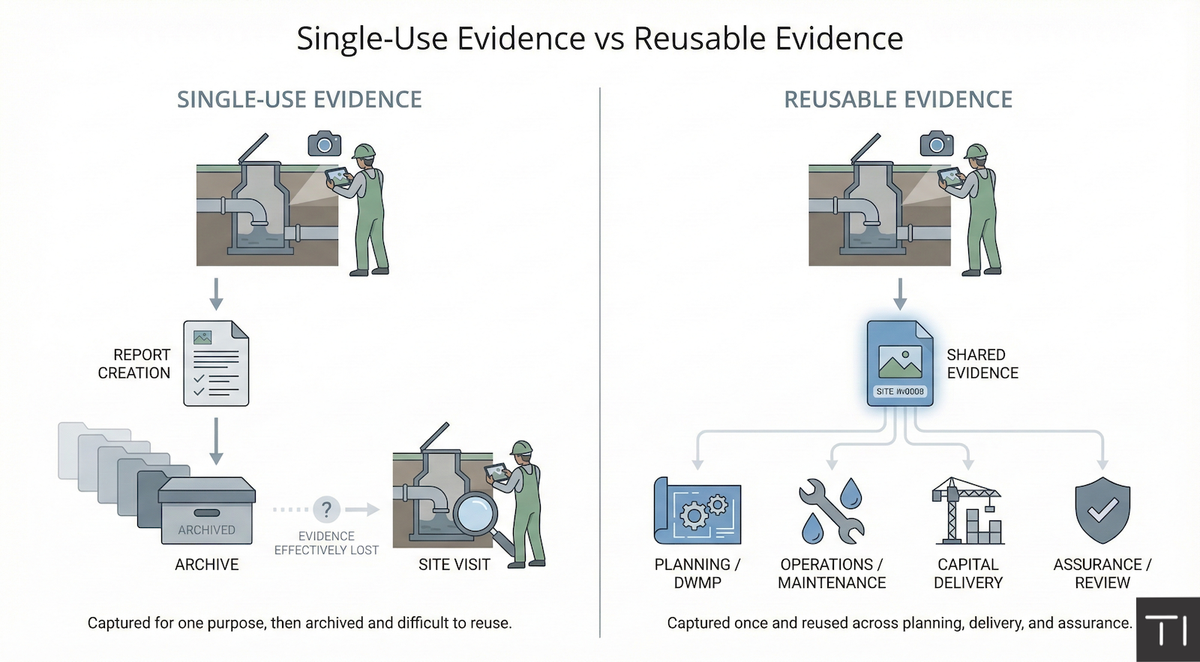
In many operational workflows, site evidence is captured to answer a specific question and then effectively forgotten. Photographs are taken to support a work order, notes are recorded during an inspection, and reports are produced to satisfy a particular review. Once that immediate need has passed, the evidence is archived, filed, or left in personal folders, rarely to be revisited.
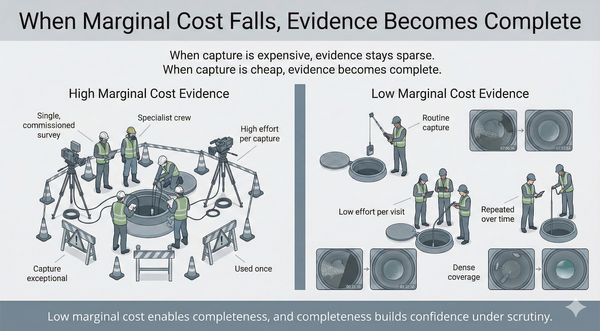
This pattern has consequences. When evidence is treated as single-use, repeat site access becomes the default way of answering new questions. Teams return to the same assets to confirm details that have already been observed, simply because the previous evidence cannot be found, trusted, or reused. Over time, this drives cost, delay, and unnecessary exposure.
Single-use evidence also concentrates knowledge in individuals rather than artefacts. The person who last visited the site becomes the reference point for what was seen and what it means. When that person is unavailable, decisions slow down or assumptions are revisited. This dependency is fragile, particularly in long-running Drainage and Wastewater Management Plan (DWMP) programmes where teams and roles change over time.
Reusable evidence changes how information flows through an organisation. When site context can be revisited, interrogated, and shared, it supports multiple functions without requiring repeated access. Evidence gathered during early planning can inform maintenance discussions. Information captured for operational purposes can later support capital scoping or assurance review. The same underlying context remains useful as questions evolve.
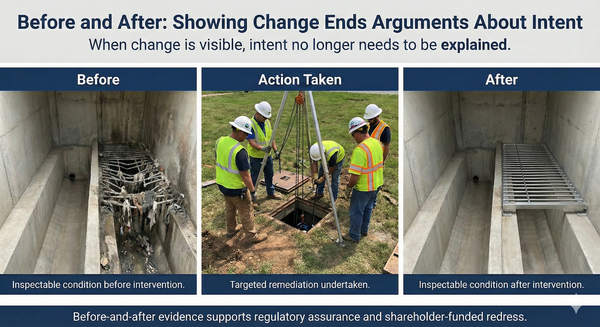
The benefits of reuse are practical. Delay is reduced because teams do not need to wait for access to resolve basic uncertainties. Exposure is reduced because fewer site visits are required to answer familiar questions. Decisions improve because they are grounded in evidence that persists beyond a single moment or interpretation.
Evidence longevity matters, particularly across AMP cycles. DWMP decisions are not isolated events. They build on prior assumptions, constraints, and observations. When evidence degrades over time or is inaccessible to new teams, those assumptions have to be revalidated, often through further site visits. Reusable evidence preserves organisational memory and reduces the need to rediscover what was already known.
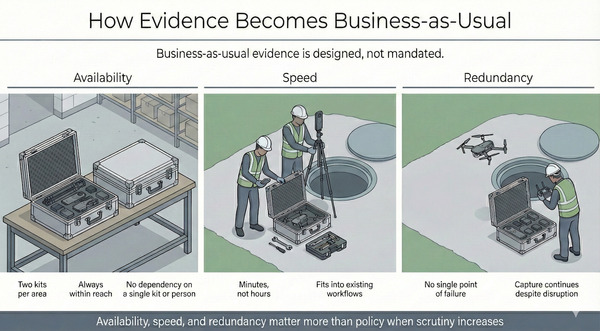
Reusability does not happen by accident. It requires evidence to be captured in a way that preserves context, not just conclusions. It requires access models that allow different teams to engage with the same information. And it requires governance that treats evidence as a shared asset rather than a by-product of a single task.
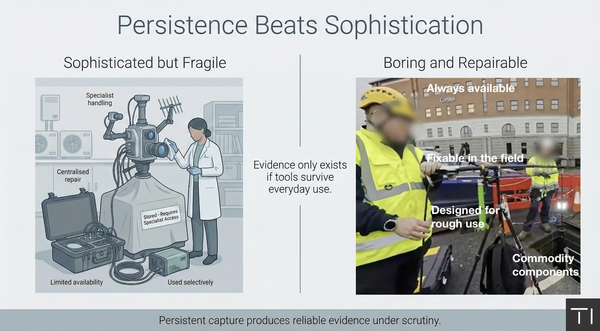
From a procurement perspective, this has clear implications. Evidence should be able to serve more than one workflow if it is to deliver long-term value. Capability should support reuse without requiring re-capture or specialist intervention. When reusability is designed in from the outset, it reduces cost, improves safety, and strengthens decision-making without adding complexity.
In DWMP delivery, the question is no longer whether evidence exists, but whether it endures. Reusability is the dimension that determines whether site evidence remains useful as decisions move from planning to delivery to assurance, or whether organisations are forced to return to site simply to relearn what they already once knew.