Assurance Is About Traceability, Not Just Compliance
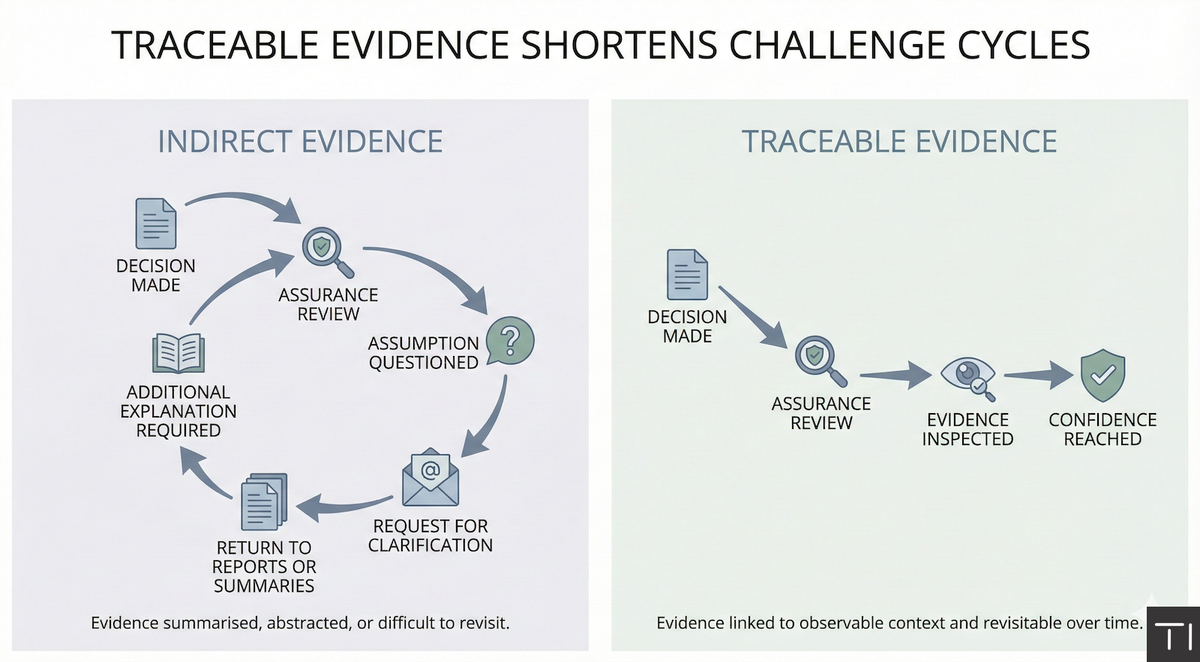
In the context of Drainage and Wastewater Management Plan (DWMP) delivery, assurance is often described in terms of process. Were the right steps followed, the correct templates used, and the required reviews completed. These questions still matter, but they are no longer sufficient on their own. As regulatory scrutiny increases, assurance is increasingly focused on whether decisions can be traced back to defensible evidence, not just whether they passed through the correct governance stages.
This shift becomes visible when assumptions are challenged. Reviewers are less interested in whether an analysis was signed off than in how its conclusions were reached. They want to understand what the assumptions were based on, how current the supporting evidence is, and whether that evidence would still stand up if circumstances change. In this context, assurance is about traceability rather than compliance alone.
Process compliance does not guarantee evidential strength. A decision can follow every prescribed step and still rest on assumptions that are weak, outdated, or difficult to interrogate. Conversely, decisions supported by clear, observable evidence often require less explanation, even if the underlying analysis is complex. The difference lies in how easily the evidence can be examined by someone who was not involved in producing it.
Static reports and summaries struggle under this form of challenge. They are designed to present conclusions, not to expose the underlying context in a way that can be revisited. When questions arise weeks or months later, teams often find themselves reconstructing the reasoning behind earlier decisions, relying on institutional memory or additional site visits to fill in gaps. Each iteration adds time and friction to the assurance process.
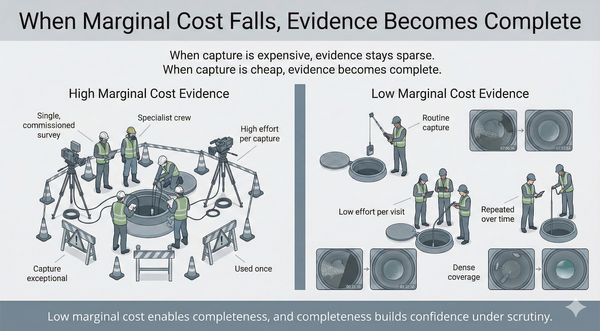
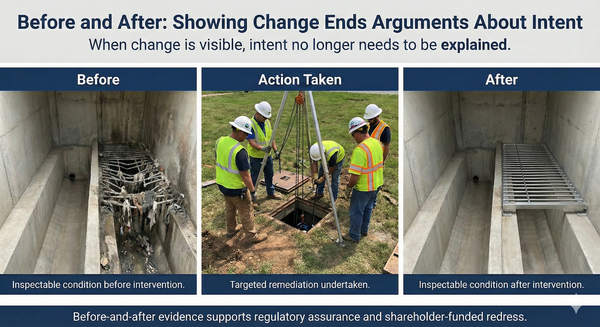
Traceable evidence changes the dynamic. When assumptions can be linked directly to something observable, challenge cycles shorten. Reviewers can see what was seen, understand why a conclusion was reached, and decide whether further investigation is required. This does not remove the need for professional judgement, but it makes that judgement easier to defend and easier to revisit.
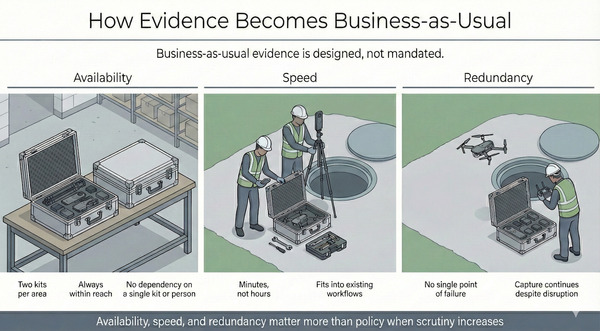
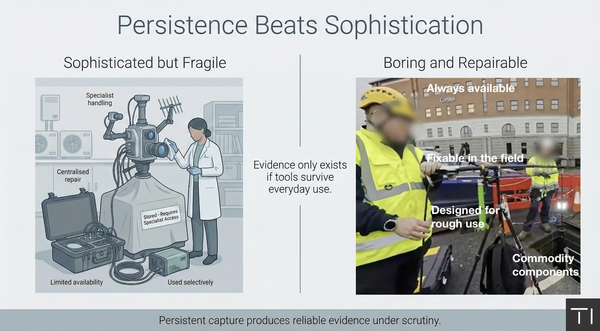
Reusability is an important part of this picture. Evidence that can be revisited over time reduces the need for defensive reporting. Instead of producing new summaries for each assurance checkpoint, teams can point back to shared evidence that remains accessible and intelligible. This supports a more proportional approach to assurance, where the level of scrutiny matches the level of risk without creating unnecessary overhead.
Observable context also supports consistency. Different reviewers, at different points in time, can examine the same underlying evidence rather than relying on second-hand descriptions. This reduces the risk that assurance outcomes depend on who happens to be involved in a particular review or how recently they have been to site.
From a procurement and governance perspective, the implications are subtle but important. Evidence needs to be inspectable, not just asserted. Assurance frameworks benefit when supporting evidence can be accessed, understood, and challenged over time, rather than consumed once and archived. Capabilities that support this form of traceability reduce both assurance burden and delivery risk, without requiring additional layers of process or documentation.
As DWMPs continue to evolve under closer scrutiny, assurance will increasingly hinge on the ability to demonstrate not just that the right processes were followed, but that decisions were grounded in evidence that remains defensible long after the original sign-off.